I was sitting with a client [sharp, experienced, runs a solid business] and we were mapping out a growth decision he’d been circling for months. Every time we got close to the edge of a real commitment, he’d pull out a spreadsheet. Another risk assessment. Another set of questions that needed answering before he could move.
From the outside, it looked like rigour. It looked like due diligence. It looked like exactly the kind of measured thinking you’d want from a leader.
But I’ve seen that pattern before, in boardrooms and in businesses, in ambitious people who should be ten steps further along than they are. And I named it.
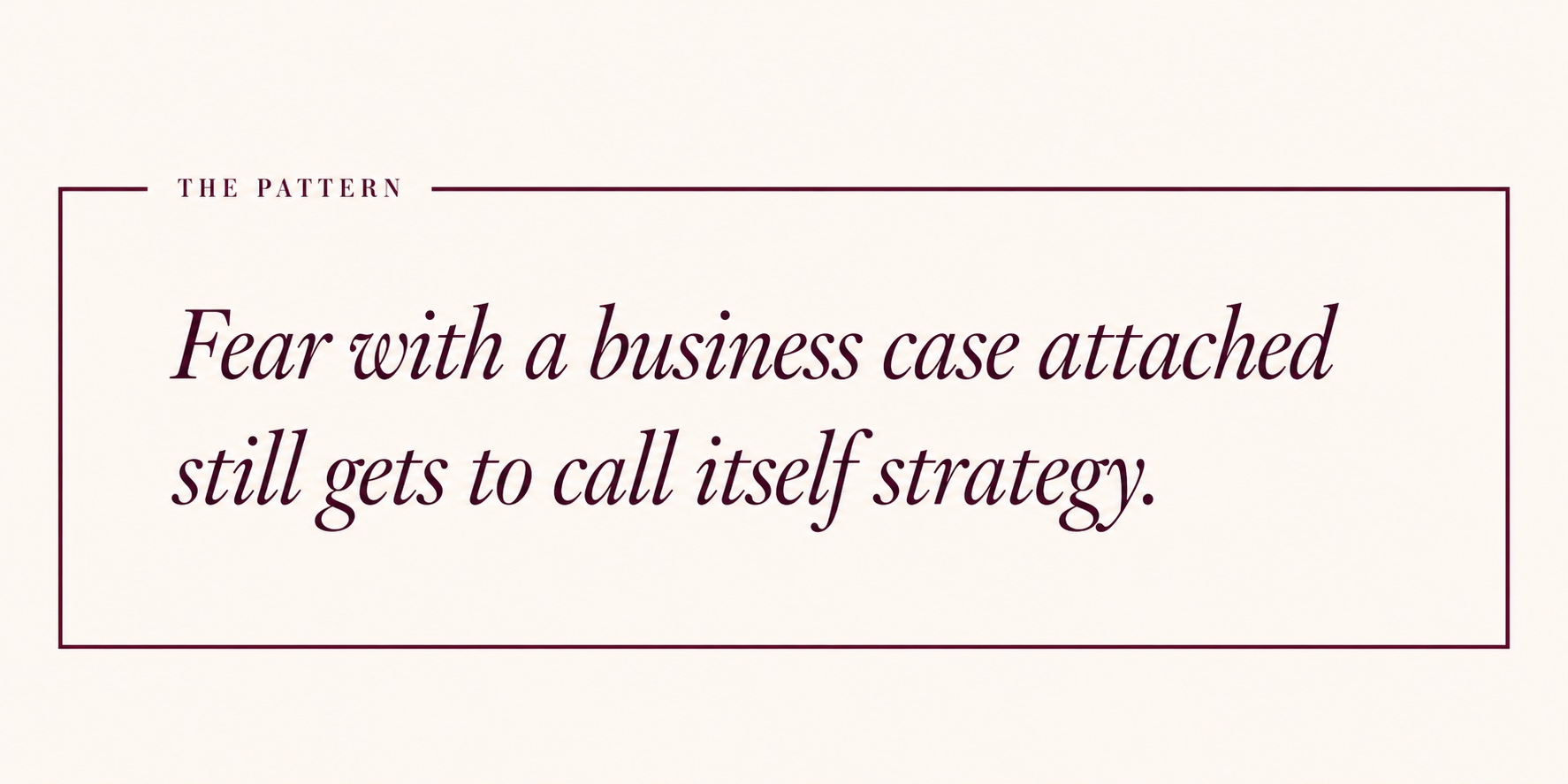
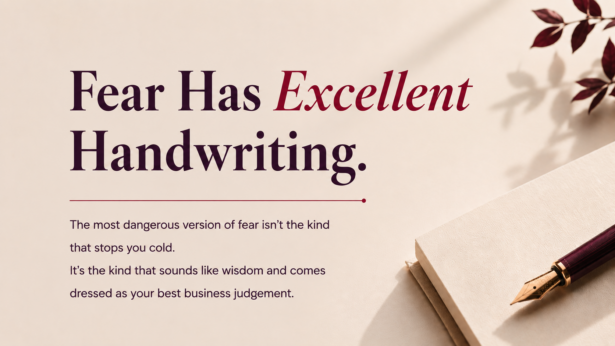
That’s the con. Fear, in its most sophisticated form, doesn’t show up as paralysis. It doesn’t arrive with hesitation and sweaty palms. High-functioning leaders don’t freeze. They analyse. They convene another working group. They request more data. They optimise for the decision that protects them from being wrong, rather than the decision that creates something remarkable.
And they call it being careful. They call it responsible leadership. They call it safety.
Here’s what I’ve learned from working with leaders across industries: when someone is stuck in an endless loop of calculation, the question worth asking isn’t “what’s the right decision?” It’s “what are they most afraid of losing?”
Because fear doesn’t operate in the abstract. It’s always protecting something specific. And usually, it’s not what it claims to be protecting.
Some of those labels come with genuine care attached. A diagnosis, for example, can be a doorway to understanding and support. But diagnosis was never meant to be a destination. It was meant to be a tool, not a title.
When we collapse into our labels, we start to organise our entire life around proving them true. We decline opportunities because “that’s not who I am.” We shrink in rooms because “I’m just introverted.” We pre-empt rejection because “I’ve always been the disadvantaged one.”
And slowly, the label stops being something we carry. It becomes something that carries us. And not toward anything good.
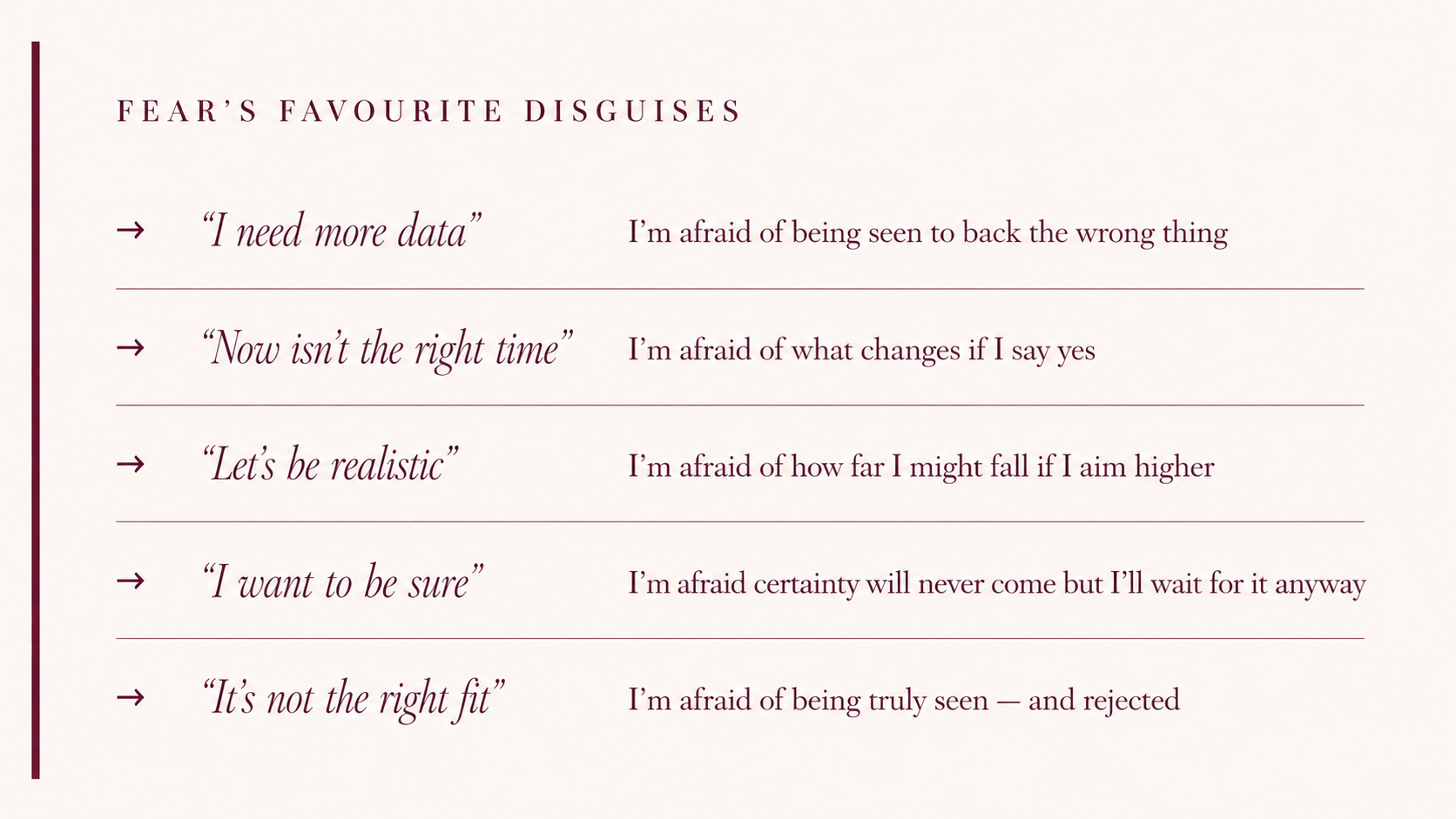
The problem with decisions made from that place is that they are optimised for avoiding loss, not for creating possibility. You’ll choose the proven path, the lower-commitment version, the option that keeps you exactly where you are, not because it’s strategically better, but because it feels less exposed.
And year after year, the business stays manageable. Safe. Comfortable. And quietly nowhere near what it was built to be.
When I work with leaders who are stuck in this pattern, there’s one question I come back to:
Is the logic you’re building protecting the business or protecting you from the business you’re afraid to become?
Because those are two very different things. And only one of them is actually serving you.
The leaders who build the things that matter, who create businesses that outlast them, that shape industries, that actually change something they didn’t get there by waiting until it felt safe. They got there by learning to recognise fear in its best suit, and choosing to move anyway.